

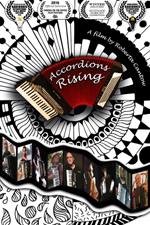
Here is the latest information on the documentary, “Accordions Rising”. Thanks to the distributor, Indie Rights, “Accordions Rising” will be marketed for foreign sales at the American Film Market in Santa Monica taking place on Nov. 1-8, 2017. This film would be a wonderful, appropriate holiday gift for accordion lovers.
In addition to availability on many US streaming sites, including Amazon,: (bit.ly/2lrM3NzAccordions_on_Amazon), You Tube and Google Play, the music documentary, Accordions Rising is now available on Amazon (for streaming and download) in the following countries: Canada, Australia, Finland, Iceland, Sweden, Denmark, New Zealand, South Africa and Ireland.
In addition, DVDs and Blu Rays will soon be available in many of the major Retail stores as well. However, if you cannot wait for them to show up there,or would like to consider a DVD or Blu Ray for holiday gift giving, contact Roberta Cantow at rcantow@originaldigital.net for whichever format you prefer OR visit the website: www.accordionsrising.com. In addition to the disks, T-Shirts can be purchased (black or white).
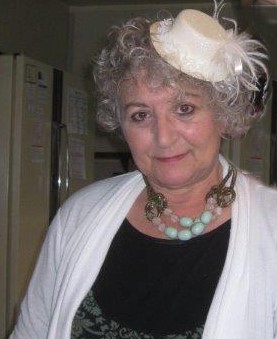
Roberta Cantow was recognized with her first grant from The American Film Institute while still a graduate film student at NYU. Through the years, The New York State Council on the Arts, the National Endowment for the Arts, the New York Foundation for the Arts and others provided grants for the completion of 4 film works. She received a NY Area Emmy for her film, Clotheslines, about the symbolic and artistic role of laundry in women’s lives, as well as many other awards and presentations. Her films and videos have garnered several Best of Category Citations in film festivals around the country as well as an Award of Excellence for Dreamtime, in 2008 and Awards of Merit for Not a Still Life, and Accordions Rising, all in the documentary category, from the Accolade Competition.
Her work has been exhibited in many of the venues for independents, including a presentation in the Cineprobe Series of the Museum of Modern Art in NYC. Her four 16mm films were selected for archival preservation by the Donnell Media Center, New York City, in 2001. All of her work will be housed in the Sophia Smith Women’s History Collection of Smith College (in perpetuity). Roberta is not currently working on a new film, but she is actively engaged as Project Coordinator with the Berkeley-based StoryCenter, through a funded initiative to bring digital storytelling to Palomar College where she teachers and to make it a campus wide phenomenon.
Excerpts from “Accordions Rising” website;”Accordions Rising” offers entertaining, conversational style interviews, anecdotal commentary and both formal and informal music performances from celebrated accordionists, composers and bands performing in America today. These musicians make up the colorful and thoughtful cast of characters who drive the story by tracing their uniquely personal attractions to the instrument and sharing their surprisingly divergent paths: from immigrant roots, Creole or Roma beginnings, for example, to a recognition of the very special niche this so-called “low art” form provides for inspirations in jazz, classical, new music, pop, fusion forms, operatic styles and beyond. The film provides a tapestry of fascinating individuals, deep passions, and above of all else, profound dedication to the instrument. We learn that though still a rebellious lot, these music makers have an audience in some of the hippest hideaways and most sought after mainstream venues. The film makes clear that the “accordion world” is actually a curious continuum that includes everything from wacky and kitsch to sophisticated, serious, meditative and post modern. As Dr. William Schimmel points out, “the accordion is the icon of the 21st century.”
Excerpts from “The Crazy Mind, Interviews with interesting people”:
How long did you take to make ‘Accordions Rising’? What is the most challenging aspect of making this film?:”From the time I started shooting until completion, it took a total of 6 years (although I was also completing another film during this time period). This film was especially challenging to make for many reasons: I was not extremely knowledgeable about music in general or accordions in particular; I knew that I would need to get permissions and licenses and need to become familiar with fair use doctrines in documentary. In addition, the participants were spread out across the country which meant a lot of travel, and I made the entire film without a film crew. In short, everything about making the film was challenging including everything I continued to learn about the subject even after the film was done.
The premise of the film was that the accordion is way more than the negative impression many people have about it. I worked to emphasize all that was new, exciting and different in the way that musicians and composers were making music with the instrument. I could not have predicted that the “accordion world” would be the primary audience and that many of them, not all, would want to see more of what was familiar to them: polkas, traditional ethnic music, accordion orchestras, classical accordion, etc, all of which were excluded from Accordions Rising. Although many in the accordion world have appreciated the film, my sights are set on widening the net. Those who are less familiar find the film to be a great big surprise.”
Why did you choose the premise in the film?:”The premise in Accordions Rising, in general, is that people believe that the accordion has fallen out of favor. A mere mention of the word, “accordion” often causes folks to roll their eyes because they consider it corny and old fashioned or the instrument of yesteryear. When I discovered that they were wrong, I intended to set the record straight.
Who/what is the focus? Why did you make it?:”I was drawn to all the ways that the accordion is thriving in the culture whether in theatrical performance, performance art, or music. Accordions Rising depicts musicians who are creating off the beaten path: those interested in new music, experimental music, the visual of an illuminated accordion accompanied by a soprano and operatic voice; rock/pop bands with a harder edge, an edgy songwriter, etc. I made the film to say that there is so much more to the instrument than what people think and that the instrument is much more versatile than what is commonly known. At one point I referred to the film as demonstrating how “accordions R us.” I meant to say that the many styles of playing and types of music that it is possible to play on the instrument reflect all of the diversity that is the current landscape of the U.S.”
For further information: rcantow@originaldigital.net


